

Vision, Behaviour & Swarm
Bio-inspired Navigation
Flying insects like honeybees and flies navigate cluttered environments using visual cues. Despite small brains, they perform complex flight behaviors. This work models honeybee vision-based navigation using machine learning, bridging biology and robotics across platforms to advance science and control systems.
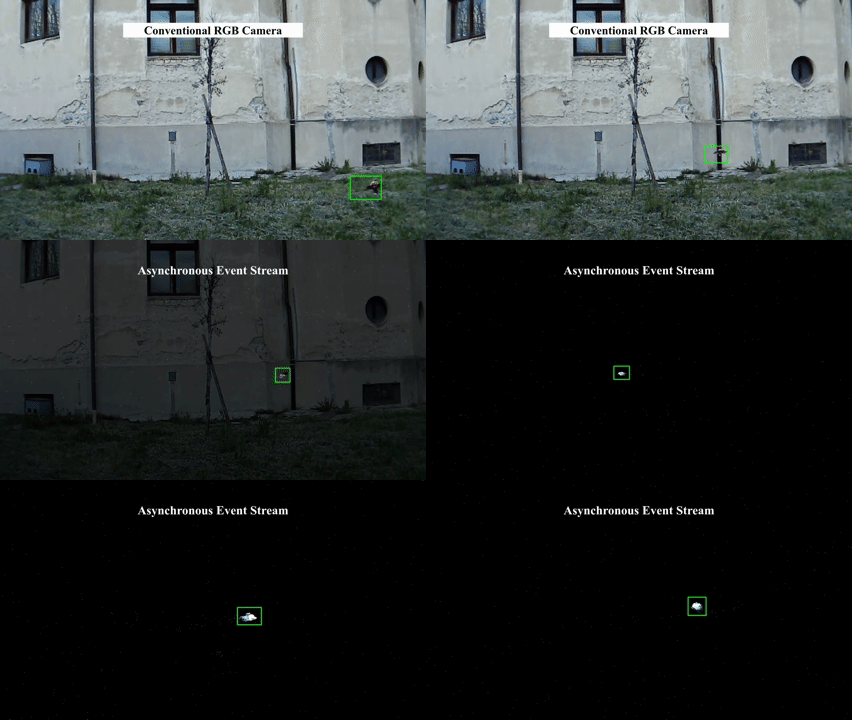
Low-Latency Perception with Event Cameras
This project develops real-time algorithms for event-based cameras, enabling object detection, tracking, and scene understanding. By leveraging lightweight methods, it addresses high event rates and resource constraints. The approach preserves microsecond-level temporal resolution while reducing latency and computational load, making it ideal for embedded systems.

Affordance perception in an embodied agent
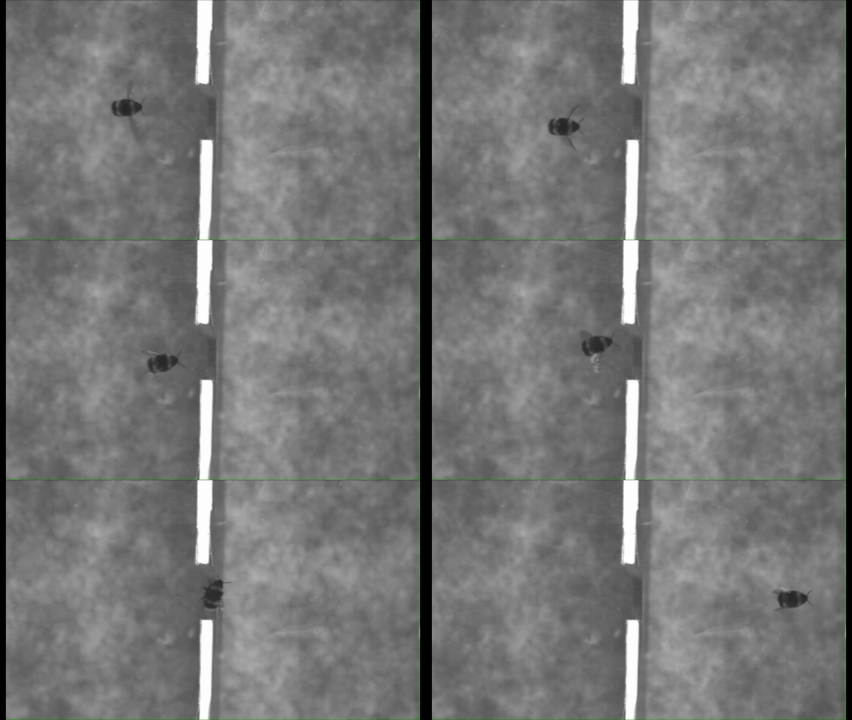
Affordance perception in the context of navigation refers to the judgement of whether an aperture affords traversability for one's body, a skill that humans, animals and insects rely on instinctively when navigating in the environment. This project explores whether that same instinct can emerge in an agent through experience alone.