

Flight Stability and Control
Investigating control strategies and energetics of insects flight in steady and unsteady wind
This study explores how insects manage to fly near the Earth's surface, where wind conditions are highly unpredictable. Unlike traditional drones or planes, insects use flapping wings and can quickly adapt their movements. They rely on both passive responses and active control to stay stable and conserve energy, even in turbulent air. Understanding these natural strategies could inspire more efficient and resilient flying robots.
Gust Load Mitigation using Passively Pitching Wings
This study explores the use of passively pitching wings to mitigate gust loads on fixed-wing UAVs in urban environments. Through experiments and CFD simulations, it investigates aerodynamic responses under varying gust conditions, offering insights into safer, more efficient UAV designs where active control systems may be insufficient.

Gust Mitigation and Flight Control using Bio-Inspired Compliant Control Surfaces
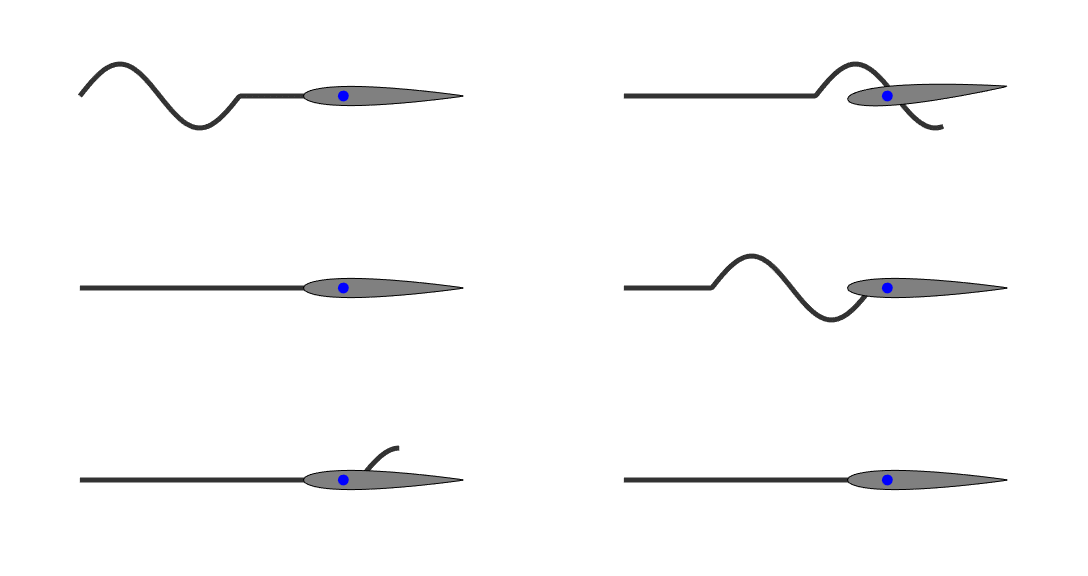
This project tests a passive gust load alleviation method using a compliant pitching wing. A torsional virtual spring ahead of the aerodynamic centre allows natural pitch response to gusts. Wind tunnel experiments compare its dynamic behaviour and load reduction against a rigid wing to evaluate its effectiveness.